On D-Day

Tags

, , , ,

My dad managed to send some letters in the immediate wake of significant events, in this case, a few days following the Normandy landing that put the Allies on the path to the final defeat of the Nazis.

It probably will interest some that my dad felt like the general public back in the states would be more informed about what had happened on June 6th, 1944. He also was puzzled about how the Catholic Church (he was Episcopalian) seemed to be a disinterested party in such a conflict, perhaps even in the rise of Mussolini.

As he says, avoiding any mention of what is happening on any war front risked having the letter censored. I recall sorting and organizing a collection of soldier letters written to a kindly older lady who would write back to them, keeping their spirits up. This was while working at the Michigan Historical Archives in Ann Arbor while obtaining my masters’ in Library and Information Science. Anyway, occasionally this woman’s correspondents would be a little careless in what they mentioned, resulting in a carefully snipped hole or strip appearing in the middle of their text, but imagine my amusement with one WWII G.I. who was so regularly inclined to slip that one letter consisted solely of a thin paper outline, the entirety of the letter having been sacrificed to the censor’s scissors.

9 June [1944]

England


Dear Folks,


Now that the papers are pretty nearly all bent on providing as much information as possible on the operations on the beaches of France I suppose you know more about the situation than I do.  Life here rolls along pretty much the same as it always did and the invasion is far away seemingly in both time and space.  Obviously, what I do know I can’t write so it is best as usual that I disregard everything military.


It is natural that everyone, including soldiers, should dream of the day when the war is over and if any one thing might be said of the second front is that it definitely leads everyone into the frame of mind that the beginning of the end is in sight.  It is logical to say, I believe, that  the Allies are definitely on that road especially when we think back to the days of Dunkerque [sic].  However, it seems to me that the gains we have made have been based more than on the bonds and such monetary “sacrifices” of the people who are earning more than they know what to do with—but in the faith that a great many soldiers, statesmen, and just plain people had in their way of life.  I shall probably never be sure if my own was strong enough for circumstances have never tested it.  However, I am still feeling a little unhappy about the weakness of the church in the present world conflict.  It is often contended that the church is too large an organization to take notice of a moment of indiscretion on the part of mankind, but it appears now that the Vatican is too small—the world too large.  I would almost be willing to wager that you will find a great many people feeling that somehow the church had failed—that in refusing to take sides for fear of appearing to favor war, that they (those who form the policy) perverted the eyes of the church away from the seemingly important thesis that physically speaking the church should be able to recognize right and wrong and to apply what force is necessary to set things aright.


I’m going to try to write more often but I won’t promise anything.  I have been hearing from you rather regularly but not from anyone else very often.  Mail moves spasmodically over here—now good, then poor.


Well, ‘tis supper time so I guess I’ll be going on up the road.


Till later then, be good,


Love,


Bill
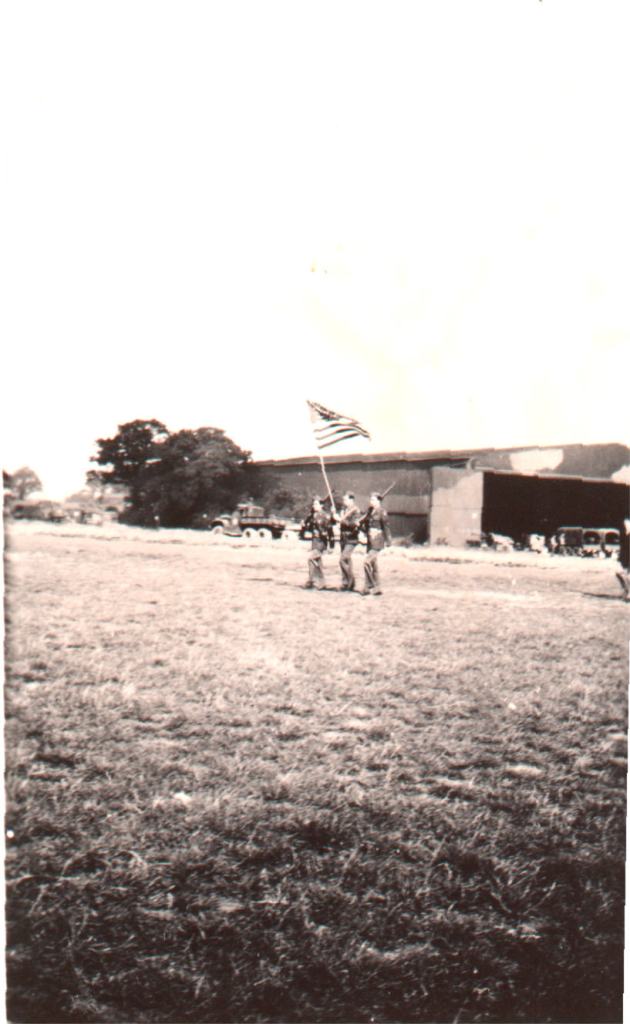
Hethel Airbase

Hethel Air Base, Norfolk, England

Election 2016 and the State of Things

Tags

, , , , , ,

A day or so ago, I responded to a post by Robert Reich about the phenomena of Donald Drumpf followers who seem to have some sort of dissociative disorder when it came to seeing things as they really are in favor of the drumbeat of “Make America Great Again”.  I seem to have struck a nerve, and one of the readers pointed out what she really liked in my post which is this paragraph:

Seriously, I think a lot has to do with the deterioration of educational quality in teaching critical and nuanced thinking, the rise of money-driven media that cares nothing about truth, and fanatical religious preaching that is tinged, oddly enough, with views of Armageddon while in the next breath teaches people that God loves rich people. I suppose it also has a lot to do with individualism on steroids, that being islands to ourselves and acting like entitled two year olds in public is something to be proud of as opposed to caring about others. Every society has its outliers, like the Dutch right winger and Anders Breivik in Norway, however other countries don’t hold them up as examples to follow as a general rule. Europe has suffered a great deal at the hands of mavericks who would tear society apart for power and mostly have learned the lessons.

My words are really from my understanding from Susan Jacoby’s book, The Age of American Unreason, which I read several years ago.  I learned about the book while watching Bill Moyer’s interview with Jacoby which you can see here.  I learned from this conversation between these two people how the idea of the President as Commander-in-Chief has become ubiquitous in viewing the Presidency, and how it “militarizes” the leader of this nation, as though that person is just the über general of us all.  Sounds like a small country dictator who rules with absolute power over impoverished and poorly educated people.  Does that sound good?  I don’t think so and I see why Jacoby hates it.  I’ve grown to hate it too.

There is so much to be plumbed from Jacoby’s book that I would highly recommend it to be read, especially in this election year, eight years after it first appeared on the scene–just prior to another election when America rejected dumb (Sarah Palin) and her knight-errant, John McCain, for a fresh new look to the Presidency.

Jacoby book

If I had had my way, this year’s presidential candidates would each have to undergo a 2 hour one-on-one interview with Bill Moyers in place of the ridiculous series of “pseudo-debates” that have occurred.  He would have separated the fools from the worthy contenders in short order.  But like a tree falling in a forest, would anyone have heard it?

And here’s the proof | Followup to Women over 50

Tags

, , ,

I think when I wrote my first post in #GigEconomics, I had the overview of why the theory has been largely substantiated in a report from PBS about women over 50 fare so badly in the job market (and therefore some of us are forced into the tenuous “gig economy”).

Here is the empirical data sets that apparently proved the fact, that it isn’t just in our heads.  Granted, once through the menopause cycle, our heads are a little more wobbly due to lack of estrogen–seems brains are tied to that hormone, else what would explain the behavior of a lot of men?

Anyway, I recall “60 Minutes” did a story back in the mists of time about the difficulty of African-Americans finding apartments (someone told me contemporary England did a similar story for black citizens in that country), where it was clear the rental agent discriminated against a “black sounding” phone caller who wanted to view a nice apartment (he was told it was no longer available) and a “white sounding” phone caller (the joke being that the caller was an African American who could change his voice to meet an insidiously racist impression of what was black and what was white) who rang up shortly after the first call and was told the agent would be happy to show the place to him.  It was the age-old story of #redlining in real estate.

Joking aside, it continues to be the reality that haunts so many of us.  I never dreamed I would not be of SOME value in the workforce, so I never prepared for this day.  Think about it, I was getting launched from grad school into the professional world when #RonaldReagan was spouting that it was “#MorninginAmerica” and Bobby McFerrin was warbling “Don’t Worry, Be Happy!”  Truly #Brightsided and now blindsided.

And with the shaky condition of the U.S. middle class, that magically shrinking demographic, the #gigeconomy really sucks, too.  The ultimate down side to all this is that obtaining my own housing is as baleful as it would be for the African American who is “red lined”, while I am “in the red”.

Rationing and Hardship

Tags

, , ,

My father was obviously impressed with the stoicism shown by the English he met, and was prone to scold the stateside folks who wrote to him complaining about having to do without this or that.

The notion that people could go for years without even seeing certain items for sale, oranges were particularly notable by their absence in wartime Britain, truly astonished him.  I often wonder if he had a lot of guilt for living to well on the base.  I never got to ask him directly myself, because I was 10 years old when he suddenly died from a massive cerebral hemorrhage; my own hardship has been the denial of having an adult relationship with my father, and forever I am frozen in time with him and anxious to find any way of connecting.  My mother has tried her best to help but it has been these letters that have come the closest, if they are an imperfect substitute.

Our lives as father and daughter met with the severest of censors: death.


Somewhere in England

Monday

[29 Mar. 1944]

Dear Folks,

There is little enough I can say, again—this self-censorship is a nuisance, if someone else were censoring it I could write reels and let them cut it out—but I’m supposed to do the job myself and with all the conflicting information I can’t figure out just what I can and can’t say.

However, I can talk about a visit I had with an English family the other day.  The gentleman is a world traveler, retired member of parliament and a tobacco baron of considerable wealth.  I met him by accident strolling along a road and we spent a couple of hours before his coal fire.  The household furniture was rather interesting and might give some idea of the age of England’s present usuable [sic] past.  The old granddaddy clock they used for accurate time, and the man who made it, died in 1745.  They had dishes on the sideboard of similar vintage and it was very much like an activated colonial museum.

And I might say that rationing here has worked rather hard on the civilians.  These people I visited haven’t seen an orange in 2 years; they get ¼ gal. of gas a week and can’t use that unless they have a good reason.

When you’re walking along the street and some little bespeckled [sic] kid about 4, looks up at you and says “Oi” say, or “’Ave you any gum (chewing gum) today?”, and you realize the poor little rascal has never seen a streetlight—you feel rather unhappy about those people back home who grouse about a few shortages.

You don’t see stars in the windows either; for here, everyone is in it somehow.  But England is confident and rock steady what I’ve seen of it—and after what I’ve seen and read in the States before I left—well, I wish America could try a little harder.

As I said, air mail stamps are about the only thing rationed that I could use.  I prefer air mail to V-mail for I somehow can’t say enough most of the time on one sheet.  However, later on I’ll probably use it some.

Take care of yourself, Peoples, and till later—

Love,

Bill

community gardens

Photos of what may be allotments or even “victory gardens” in the Norfolk countryside.  It took a lot of close scrutiny to see why my father might have taken this picture, and it seems the tell-tale sign is a garden shed just right of center in this photo, coupled with the delineations between parcels of land.

Coping with Wartime Britain

Tags

, ,

Group photo with Bill Murchie_0002

Life in the Air Base (Lt. Murchie, far right)


Somewhere in England

Sunday morning

[28 Mar. 1944]

Dear Folks,

Recently I visited in a little town by the name of Stowe [sic] in the county of Staffordshire (?), I believe.  It was quite English in the oldest English style—narrow streets that puddled off in various unaccountable directions, houses crowding the sidewalk half into the street—the pubs, tea shops and everything else that goes with a little country town in England are here and in a vastly different pattern from an American city or even small town.  It is interesting and likable—but somehow in the manner one might like a museum or summer cottage.  For the novelty or atmosphere perhaps—but as a steady diet—I’m afraid the blood is too thin—the pattern too set.

I might say here one or two things about our living conditions—just, that the food is superior to anything I’ve had in the army thus far and is far from what you’d expect—fresh eggs, canned milk, coffee, plenty of butter, sugar, oranges, and no end of good American food.  This morning we had hot cakes that were the best I have ever eaten—bar none—they melted like the butter on top of them.  Our quarters are very good and although I can’t say very much about them, I can say that I’ve had the first good hot shower in many a day and the rooms are steam heated.  Anything else would probably be of a military nature.

Before I write many more letters, I might say that if at any time any letters of mine come through with words or phrased censored our—please don’t bother or speculate—I shall try to say nothing that will necessitate that for in the first place I have to censor my own letters—but it may be that a man with more experience in this theatre, may see, in checking our mail, where a phrase or two is of military importance and to play safe he might delete it.

They weren’t fooling about this blackout—it is really dark outside at night—even starlight is bright on the main street of a town.  Add to the blackout the fact they drive on the opposite side of the street and you have a suggestion of the potentialities.

The money system is slowly unraveling itself although at first it was a riot to watch some of these poker games when a newcomer to Britain would fire in a pound and yell “Bet a buck!”

But it isn’t hard to begin to think in terms of “2 and 4” etc. and maybe in a month or two I’ll have it down pretty good.

Britain poses many problems—many new—some old; in her treatment of Americans—I’m to knew [sic] here to react as yet in one way or the other, but it is different here in a way than I had imagined.

I shall write again soon—till later,

Love,

Bill

A Fifties Phenomenon and I don’t mean “Happy Days”

Tags

, ,

So I am a member of the “#gigeconomy”, a sort of purgatory that has strange bedfellows such as the quite youthful (those just emerging from college and finding the job market is a bit of a nightmare) and the mature employee who has smacked into the wall of ageism.  Well, we don’t like to admit the wall is there, but it is.

Recently I came across a great article about the specific issue of women over 50 who are increasingly locked out of jobs that can mean the difference between Coach bags or Bag Ladydom.  PBS Newshour did this spotlight report that showed how easily one can draw a series of inferences to what would seem a logical conclusion, although, unlike Sherlock Holmes, in this case all the building blocks and the final product really have no grounding in any reality of today’s society.

I just went through three interviews for part-time jobs in a condensed time frame, partly emboldened by my seasonal stint at a major retailer who managed to look past the silver threads among the gold and hired me at Christmas time.  Somehow, I get pipped at the post and while I am not certain that I was passed over for someone much younger, I really think that my age and skill set (typically far richer than the job requires) has a wet blanket effect.

So I move on, consigned to find any gig work I can as a virtual assistant cum technology whizz–I even have taken to referring to myself as an administrative or office support ninja, can you believe?  The gaps between money in my pocket are very large, and unfortunately the gathering of various opportunities rely on being able to spend some cash.

Welcome to ageism, gig economics, and the marginalization of whole groups.  Eventually it logically should bring down the whole works.


World War II Letters and Photos

Tags

, , ,

Bill Murchie and puppies

Lt. William R. Murchie, Somewhere in England

Welcome to this mini-diary of the letters and photos of my father, William R. Murchie, who served in the 8th Army Air Force during World War II.  These writings are primarily about his experiences in England, where he served from sometime in March 1944 through to the summer of 1945.

My father’s family hailed from all corners of Great Britain: his Murchie grandfather emigrated to the U.S. from Ayrshire Scotland with an English wife who was born “within sight of the White Cliffs of Dover” in Kent; his mother’s family, the Lowes, were emigrants from Wales, arriving in Wisconsin approximately the same time as the Murchies settled in western Pennsylvania.

This first letter was sent to Bill’s parents once he arrived at Hethel Air Field, the base camp for the 389th Bomber Group.  It’s opening gives us this blog’s main collective title, “Somewhere in England” because it was not possible to tell the family any other details about his location.

My grandfather, Ed Murchie, was a gardener and florist, and this is a recurring theme in my father’s letters since he found it quite useful to have a way to thank as well as endear himself to others–especially as his lady friends appreciated a gift of a charming bouquet of flowers.

Somewhere in England

24 Mar. 1944

Dear Folks,

By this time I trust my cable has informed you that I am no longer in the States and that all is well with me, as it most certainly is.  We had a pleasant journey and I have and am enjoying myself very much [sic].  Naturally I haven’t been receiving mail as yet but they say we’ll be getting it before too long a time.  There is at the moment, only one thing I can think of that you might send and that is U.S. air mail stamps.  I can use them here but they are somewhat rationed so if you can put a few in an envelope and send them along they would be appreciated very much, (don’t send V-mail forms as I can’t use them here—not the kind you have there, that is).

Before I left, I wrote you giving a couple of addresses to which I would like to have some flowers sent; if, by any chance that didn’t get through, let me know and I’ll repeat that set of addresses.  They were in New Haven and New York.

My contact with the English has been limited and I can give little on my reactions to either them or England.  Thus far, I must admit that I have seen little here that America hasn’t, in quantity and quality, a definite superiority.  I realize that they have been at war here a long time, but even yet, the fundamental definition of the country is still there.  Surprisingly, (not to me exactly) enough, however, I’ve noticed that I react fundamentally as an Englishman would so that two generations have not removed the traces of the thrice-seeded British blood I have—Welsh, English, Scotch.  There are many men of other temperments [sic] who can’t understand the studied reserve of the English, but to me it is just as I react myself.

I saw my first English pheasant this evening—it looked at a distance like a guinea fowl—but his size and running ability were more game-like.  Spring is just coming to England and the buds are beginning to look red and green on the thorns and shrubs.

I shall try to write fairly constantly and hope that I can make up for my silence of these past weeks.  For the present then, my regards to anyone who may remember me—and, be good now.

Love,

Bill